News
Recent Bird Sightings - November 23
Fall migration continues, as we get closer to settling into the winter birding activity at Cheyenne Bottoms. Variable weather so far this season has created some interesting birding, and has presented some very interesting (and rare) migrants to the area, including a Magnificent Frigatebird that was spotted at Cheyenne Bottoms on Nov. 8. Large flocks of Geese (mostly Snows and White-fronts) and Ducks (mixed species) predominate [...]
Recent Bird Sightings - October 15
Fall migration continues on! Gulls, Pelicans, Coots, and Grebes seem to be the birds we are getting the most comments about in the last weeks. Birds are congregating in large flocks either staging to head south (e.g. swallows) or grouping up for the winter months (e.g. blackbirds). Herons, egrets, and other waders have decreased, but some individuals will stick around until we get prolonged cold weather. Duck and Goose numbers and [...]
Recent Bird Sightings-September 4
Fall migration continues and forecasts are showing the potential for a lot of bird movement in the coming days as some large weather fronts are predicted. Cheyenne Bottoms birds have definitely responded positively to the flooding of most pools this past week. KDWPT staff continue to flood all pools of the Wildlife Area using stored water reserves. Early migrant ducks, especially Blue-winged and Green-winged Teal, [...]
Recent Bird Sightings-August 21
Note: The Kansas Wetlands Education Center is open normal summer hours. Cheyenne Bottoms Wildlife Area and Preserve are open to the public as normal. Fall migration is slowly progressing. Fall migrants will continue to show up over the next couple months. This is a good time of year to plan multiple trips through the wetlands, as things will change weekly or even daily. Bird activity is still a bit slow at Cheyenne Bottoms, mostly due to the lack of [...]
Recent Bird Sightings-July 15
Note: The Kansas Wetlands Education Center is open normal summer hours. Cheyenne Bottoms Wildlife Area and Preserve are open to the public as normal. Summer birding is still the norm right now. However, there were signs in the last week that some of the first returning migrant shorebirds may have arrived. They are right on time, as most years we see some shorebirds around the middle of July. These are probably birds that either did […]
Recent Bird Sightings-June 16
Note: The Kansas Wetlands Education Center is open again to the public as of June 3. Cheyenne Bottoms Wildlife Area and Preserve are open to the public as normal. Spring migration is mostly over. June typically sees a large reduction in bird activity. Coupled with the hot, dry days and several pools at Cheyenne Bottoms being dry, bird activity is relatively slow. We are in the summer birding mode right now, with the common summer […]
Recent Bird Sightings-May 22
Note: Due to the COVID-19 outbreak, the Kansas Wetlands Education Center will be closed to the public indefinitely. Cheyenne Bottoms Wildlife Area and Preserve are still open to the public as normal. Spring migration continues, but is winding down. Several bird species have come and gone in the last few weeks as they complete their spring migration through the area. As we get into June, bird activity generally reduces significantly. Many of Cheyenne Bottoms Wildlife […]
Recent Bird Sightings-April 28
Note: Due to the COVID-19 outbreak, the Kansas Wetlands Education Center will be closed to the public indefinitely. Cheyenne Bottoms Wildlife Area and Preserve are still open to the public as normal. Spring migration is approaching its peak. Several “First of Season” (FOS) birds continue to show up frequently. Shorebird species have arrived in numbers over the last few days. Song bird migrants have also shown up. Waterfowl diversity is still great; however, there is […]
Recent Bird Sightings-April 15
Note: Due to the COVID-19 outbreak, the Kansas Wetlands Education Center will be closed to the public indefinitely. Cheyenne Bottoms Wildlife Area and Preserve are still open to the public as normal. Spring migration continues and will be hitting its peak over the next couple weeks. Several “First of Season” (FOS) birds continue to show up frequently. Waterfowl numbers and diversity are still great; however, there is a shift toward more wading and shorebirds. Many […]
Recent Bird Sightings-March 30
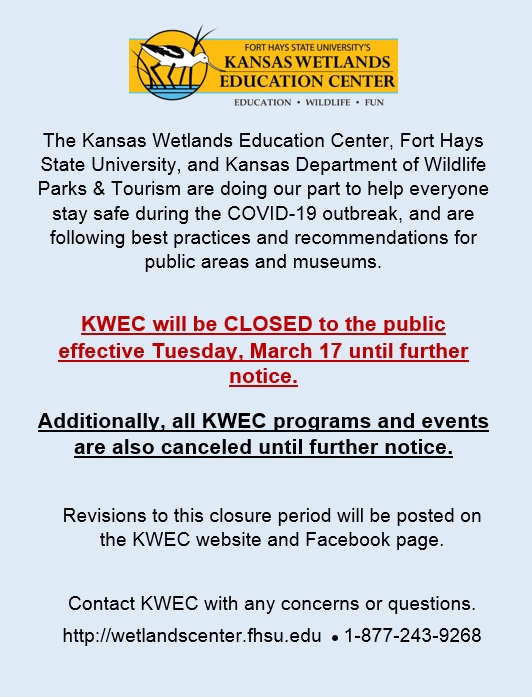
Note: Due to the COVID-19 outbreak, the Kansas Wetlands Education Center will be closed to the public beginning March 17 indefinitely. Cheyenne Bottoms Wildlife Area and Preserve are still open to the public as normal. Spring migration is ongoing. Several “First of Season” (FOS) birds have been observed in the past 2 weeks. Waterfowl numbers and diversity are still dominating the bird communities; however, other wetland birds are showing up in good numbers and will […]
Recent Bird Sightings-March 16
Note: Due to the COVID-19 outbreak, the Kansas Wetlands Education Center will be closed to the public beginning March 17 indefinitely. Cheyenne Bottoms Wildlife Area and Preserve are still open to the public as normal. Spring migration is ongoing and ramping up. Several “First of Season” (FOS) birds have been observed in the past 2 weeks. Waterfowl numbers and diversity are dominating the bird communities currently; however, the first shorebirds have shown up and will […]